
Manual: Climate Change Adaptation, Preparedness and Disaster Risk Reduction
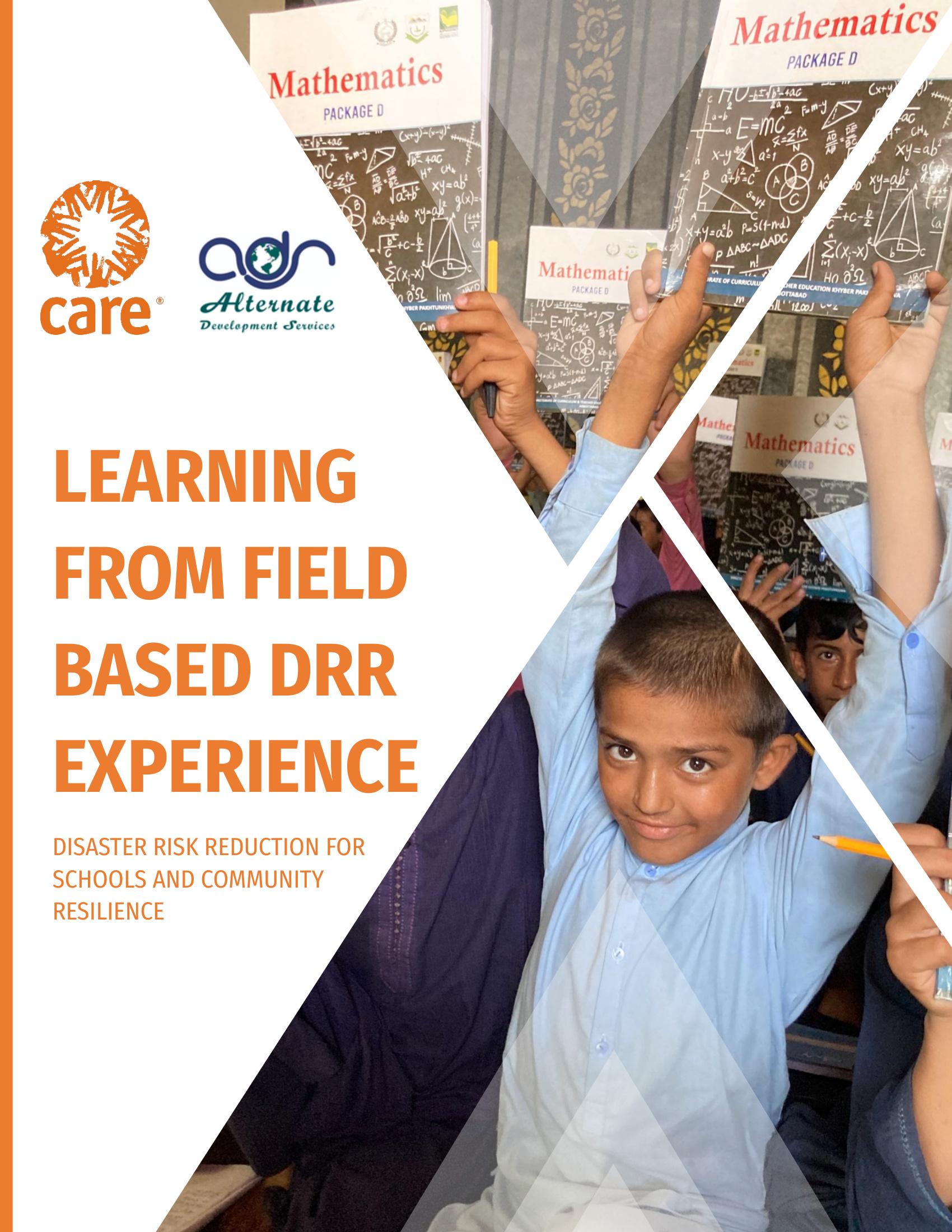
A training manual on climate change adaptation, disaster risk reduction, and school disaster management for educators, students, and communities.
Summary
This training manual, developed by ADS for CARE International Pakistan (October 2023), is a Training-of-Trainers guide on Climate Change Adaptation (CCA), Disaster Risk Reduction (DRR) and School Disaster Risk Management for teachers, students, communities and CIP project staff working in Mansehra, Bannu and Kohat districts of Khyber Pakhtunkhwa and Chaghi and Loralai districts of Balochistan. Structured across six modules, from introducing climate change and DRR concepts through provincial climate impacts, adaptation strategies, safer-school planning, gender-responsive risk reduction, and community resilience tools, it combines conceptual explanations, real Pakistani case studies (including community-built flood barriers in Daman, KP-Punjab, and NDMA's glacial-lake-outburst-flood early warning systems), and interactive training activities.
Key Points
- 1The manual is structured across six training modules, from introducing climate change/DRR concepts through provincial impacts, adaptation strategies, safer-school planning, gender-responsive risk reduction, and community resilience tools.
- 2It targets teachers, students, communities, and CARE International Pakistan project staff across five districts: Mansehra, Bannu and Kohat (Khyber Pakhtunkhwa) and Chaghi and Loralai (Balochistan).
- 3Citing ReliefWeb data, it reports that Pakistan's 2022 floods damaged or destroyed 25,993 schools and disrupted learning for 672,000 school-aged children in need of emergency-education support.
- 4It documents a real Pakistani DRR case study from the Daman region (KP-Punjab border), where communities build flood protection walls locally known as "Shehr Panah" to reduce hill-torrent flooding.
- 5It references NDMA's Glacial Lake Outburst Flood (GLOF-II) project, which installs early-warning monitoring equipment, creates community-based disaster risk management centers, and maintains gabion walls and irrigation channels to mitigate flood damage.